
Most women do not need the same gynecological checkups at 16, 26, 46, and 66. That is exactly why age based planning matters. The right checkup at the right time can detect cervical changes earlier, manage menstrual or hormonal problems before they escalate, and reduce the chance that symptoms are ignored until they become harder to treat. For women comparing a gynecology clinic or searching for a gynecologist in Nepal, the real goal is not “more tests.” It is the right preventive care, at the right age, for the right risk level.
Direct answer: Gynecological checkups are preventive visits that assess menstrual health, sexual and reproductive health, cervical cancer screening needs, infection risk, contraception, menopause related concerns, and symptom-based pelvic issues. They should be tailored by age, symptoms, sexual history, pregnancy plans, and personal or family risk factors.
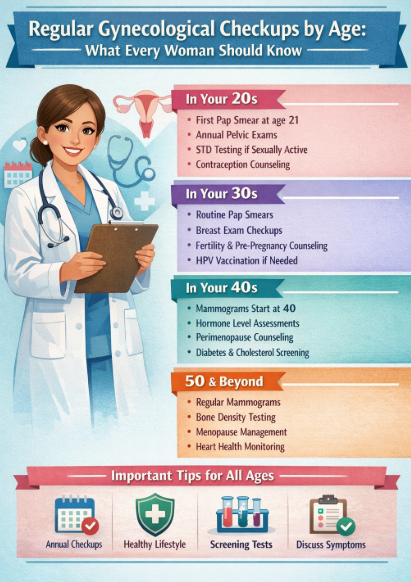
Why gynecological checkups matter more than many women think
A common mistake is assuming a gynecological checkup is only necessary when there is pain, discharge, irregular periods, or pregnancy. Good gynecologic care is broader than that. Preventive visits help identify cervical precancer, untreated infections, contraceptive problems, perimenopausal changes, abnormal bleeding, and fertility-related red flags earlier, often before they disrupt daily life. ACOG recommends periodic well-woman care even when every component of the visit is not needed every year.
A gynecological checkup is not a single exam. It is a decision point where age, symptoms, screening history, and future plans are aligned into one preventive strategy.
What a routine visit can help with
- Menstrual irregularities
- Pelvic pain or painful periods
- Vaginal discharge, itching, or infection concerns
- Contraception counseling
- Fertility planning
- Cervical cancer screening
- STI risk assessment
- Perimenopause and menopause symptoms
- Breast health guidance
- Urinary or prolapse symptoms
Summary
- Not every visit requires a pelvic exam.
- Not every woman needs the same screening at the same age.
- Symptoms always override routine timelines.
- Prevention works best when visits are planned before problems feel urgent.
Gynecological Checkups by age: what changes over time
Teens and young women: ages 13–19
In adolescence, the first gynecologic contact is often educational rather than procedure heavy. A young woman may need guidance on periods, severe cramps, acne linked to hormones, HPV vaccination, discharge concerns, or contraception. A routine internal pelvic exam is not automatically required unless symptoms, history, or a specific medical concern makes it necessary.
Priority issues in the teen years
- Painful or very heavy periods
- Irregular cycles that persist
- PCOS concerns
- Sexual health questions
- STI counseling and testing where appropriate
- HPV vaccination discussion
- Education about what is normal and what is not
What matters most at this age: reassurance, symptom assessment, cycle tracking, and prevention.
Quick summary
- Focus on education and symptom review
- Internal exam only when clinically indicated
- Build comfort with preventive women’s health early
Women in their 20s: ages 20–29
This is often the decade when Gynecological Checkups become more structured. Cervical cancer screening commonly begins at age 21 for average-risk women in ACOG guidance, with Pap testing every 3 years for ages 21–29; HPV testing may also be considered in some settings, while other organizations increasingly emphasize primary HPV testing starting at age 25. WHO also supports HPV-based cervical screening approaches beginning around age 30 for the general population, with earlier screening for women living with HIV. The practical takeaway: local protocol and individual risk matter, but this is the decade when screening history starts to matter.
In your 20s, routine visits often cover
- Pap smear or cervical screening planning
- Contraception review
- STI screening based on risk
- Sexual pain or recurrent infection concerns
- Preconception counseling
- PCOS, acne, weight, or hormone-related issues
CDC recommends annual chlamydia and gonorrhea screening for sexually active women under 25, and for women 25 and older if risk is higher.
Strategic insight:
Many women in their 20s confuse “I feel healthy” with “I do not need follow-up.” But cervical screening is designed precisely because early cervical cell changes often cause no symptoms.
Women in their 30s: ages 30–39
In the 30s, gynecological care usually becomes more layered. Women may still need contraception, but fertility planning, pregnancy preparation, fibroid symptoms, endometriosis, recurrent miscarriages, or persistent cervical screening follow-up become more relevant. Depending on the guideline pathway used, HPV-based cervical screening becomes more central in this decade.
Main goals in your 30s
- Keep cervical screening on schedule
- Address fertility planning early
- Evaluate abnormal bleeding, pelvic pain, or painful intercourse promptly
- Review thyroid, metabolic, and lifestyle factors when cycles change
- Discuss pregnancy spacing and preconception health
Summary for this age group
- Preventive screening still matters, even without symptoms
- Fertility questions should be raised earlier, not later
- Persistent pelvic pain is not something to normalize
By the mid-30s, gynecological care shifted from simple maintenance to future-impact planning. Decisions made here can affect fertility, pregnancy outcomes, and cancer prevention later.
Women in their 40s: ages 40–49
The 40s are often a transition decade. Some women still have regular cycles; others begin perimenopause. This is the stage when heavy bleeding, cycle unpredictability, fibroids, ovarian cyst concerns, and sleep or mood changes may become more common. Breast screening discussions also become more active. The USPSTF currently recommends biennial mammography for average-risk women ages 40–74.
Key priorities in your 40s
- Evaluate abnormal uterine bleeding promptly
- Continue cervical screening based on prior results
- Review contraception if pregnancy is still possible
- Discuss mammography timing and schedule
- Assess perimenopause symptoms
- Address urinary leakage, prolapse, or sexual discomfort early
summary
- Do not dismiss heavy bleeding as “just age”
- Perimenopause is real, but not every symptom is hormonal
- Preventive visits in the 40s are often diagnostic as well as routine
Women in their 50s and beyond
After 50, gynecological care often pivots toward menopause management, vaginal dryness, urinary symptoms, prolapse, bone health conversations, and cancer-screening continuity. Cervical screening may continue through age 65 depending on prior normal results and risk history. Some women can stop screening after 65 if they have had adequate prior negative screening and no history of significant cervical precancer; others may need ongoing follow-up.
In this stage, visits often focus on
- Hot flashes and sleep disturbance
- Vaginal dryness and painful intercourse
- Recurrent urinary symptoms
- Postmenopausal bleeding
- Pelvic organ prolapse
- Continued breast and cervical screening review
Important clinical rule:
Postmenopausal bleeding should never be treated as routine aging. It needs assessment. This is one of the clearest reasons routine access to a qualified gynecologist in Nepal matters.
What usually happens during a gynecological checkup?
A good visit is not just an exam table encounter. It is a structured review.
Typical checkup process
- Medical and menstrual history
- Symptom review
- Sexual and reproductive history
- Contraception or fertility discussion
- Screening review based on age and risk
- Physical or pelvic exam only if indicated
- Testing, treatment, or follow-up plan
ACOG states pelvic examinations should be performed when indicated by symptoms or medical history, rather than treated as an automatic requirement for every routine visit.
Age-based screening snapshot
| Age group | Main checkup focus | Common screening discussions |
| Teens | Periods, pain, hormones, education, HPV vaccination | STI testing if indicated |
| 20s | Contraception, cervical screening start, STI risk | Pap test planning; STI screening |
| 30s | Cervical screening, fertility, pelvic pain, pregnancy planning | HPV/Pap pathway depending on protocol |
| 40s | Abnormal bleeding, perimenopause, breast health | Mammography discussion; continued cervical screening |
| 50+ | Menopause, prolapse, urinary symptoms, bleeding after menopause | Cervical screening review; breast screening continuation |
Screening intervals depend on personal history, results, pregnancy status, immune status, and local protocols.
When should a woman book earlier than her regular checkup?
Do not wait for the next “routine” visit if you have:
- Bleeding between periods
- Very heavy periods
- Postmenopausal bleeding
- Persistent pelvic pain
- Pain during sex
- Recurrent vaginal infection
- Foul-smelling discharge
- Missed periods with possible pregnancy
- Difficulty conceiving
- New breast lump
- Severe menstrual pain that disrupts life
Original insight:
Women often delay care because symptoms rise slowly, not suddenly. In gynecology, slow progression is exactly what makes delay risky; abnormal bleeding, cervical changes, and endometriosis do not always announce themselves dramatically.
How to choose a gynecology clinic in Nepal
People searching for the best gynecology clinic in Nepal or a reliable gynecologist in Nepal often compare only convenience, price, or location. That is not enough.
What to evaluate instead
- Qualified specialists with visible credentials
- Clear women’s health services, not vague “general care”
- Cervical screening pathway availability
- Imaging and minor procedure access
- Fertility and menopause support if needed
- Continuity of care with follow-up systems
- Doctor availability that matches real-life schedules
What a stronger clinic signal looks like
- Named consultants
- Defined subspecialties
- Clear OPD timings
- Preventive and diagnostic services in one pathway
This is where a gynecology clinic becomes more useful than a one-off consultation room: it can connect screening, diagnostics, treatment, and follow-up.
Karuna City Clinic: relevant clinical context

For readers evaluating a best clinic in Nepal for women’s preventive care, Karuna City Clinic presents several trust signals on its own website. The clinic lists multiple gynecology and obstetrics specialists, including Dr. Sona Shrestha, Sr. Consultant Obs/Gynae (MBBS, MD Gynaecology & Obstetrics), Dr. Bhaba Malla Shrestha, Sr. Consultant Obs/Gynae with Fellowship in Reproductive Medicine, and Dr. Dilasha Timilsina, Consultant Gynaecology & Obstetrics (MBBS, MD). Karuna City Clinic also describes its women’s health and OB/GYN services as part of a multispecialty setup in Kathmandu.
That matters strategically. A woman coming for routine Gynecological Checkups may later need infertility guidance, cervical screening follow-up, imaging, or menopause support. A clinic with senior consultants and multidisciplinary access is structurally better positioned for continuity than a fragmented, visit-by-visit setup. Based on Karuna’s published doctor roster, this includes senior consultant experience and subspecialty support rather than a single-doctor model.
FAQ: Gynecological Checkups
1. How often should women get gynecological checkups?
Most women benefit from periodic well-woman visits, but the exact interval depends on age, symptoms, sexual history, prior screening results, pregnancy plans, and risk profile. Some components are annual; others follow longer screening intervals.
2. Do all gynecological checkups require a pelvic exam?
No. A pelvic exam is not automatically required at every routine visit. It is often done when symptoms, history, or a specific clinical question makes it useful.
3. At what age should cervical screening start?
For many average-risk women, ACOG guidance starts cervical screening at age 21. Other organizations increasingly emphasize HPV-based screening starting at age 25. Local protocol and risk factors should guide the final plan.
4. Should women still go for checkups after menopause?
Yes. Menopause changes the reasons for the visit, not the value of the visit. Postmenopausal bleeding, vaginal dryness, urinary symptoms, prolapse, and screening review all remain important.
5. What symptoms mean I should not wait for my next routine checkup?
Heavy bleeding, bleeding after menopause, pelvic pain, foul discharge, pain during sex, missed periods with possible pregnancy, or fertility concerns should be evaluated earlier.
6. What should I look for in the best gynecology clinic in Nepal?
Look for named specialists, clear credentials, screening services, continuity of care, and a clinic that can manage preventive, diagnostic, and follow-up needs in one pathway.
7. Is a gynecologist in Nepal only necessary during pregnancy?
No. Gynecologists also manage periods, infections, screening, fertility, PCOS, pelvic pain, menopause, and preventive women’s health.
Conclusion: the right checkup is age-specific, not one-size-fits-all
The smartest way to think about Gynecological Checkups is this: they should evolve as your body, risk profile, and life stage evolve.
Key takeaways
- Teens need education, symptom assessment, and prevention.
- Women in their 20s and 30s need structured cervical screening and reproductive planning.
- Women in their 40s need stronger attention to abnormal bleeding, perimenopause, and breast screening.
- Women over 50 need menopause care, bleeding evaluation, and screening review.
- The best outcomes come from timely checkups, not symptom-driven delays.
For women comparing a gynecology clinic, a gynecologist in Nepal, or the best clinic in Nepal, the right choice is the one that combines preventive logic, qualified specialists, and continuity of care. Karuna City Clinic’s published women’s health team and multispecialty structure make it relevant in that conversation without changing the core truth: what matters most is getting the right care before a small issue becomes a bigger one.