
Many women experience pelvic pain, bloating, heavy periods, or irregular cycles at some point in life. When these symptoms appear, two common possibilities often come up during a consultation: fibroids and ovarian cysts. Although they are both common gynaecological conditions, they are not the same. They develop in different parts of the reproductive system, cause different symptom patterns, and may need very different treatment plans.
Understanding the difference is important because early assessment can reduce anxiety, improve comfort, and help women make better decisions about their health. For anyone searching online for a gynaecology clinic in Nepal, a trusted clinic in Nepal, or an experienced gynaecologist in Nepal, it helps to know what these conditions are, when to get checked, and what kind of care may be needed.
At Karuna City Clinic, women’s health concerns are best approached with clear diagnosis, careful listening, and a personalised plan. That matters because not every pelvic symptom means something serious, but not every symptom should be ignored either.
What are fibroids cysts?
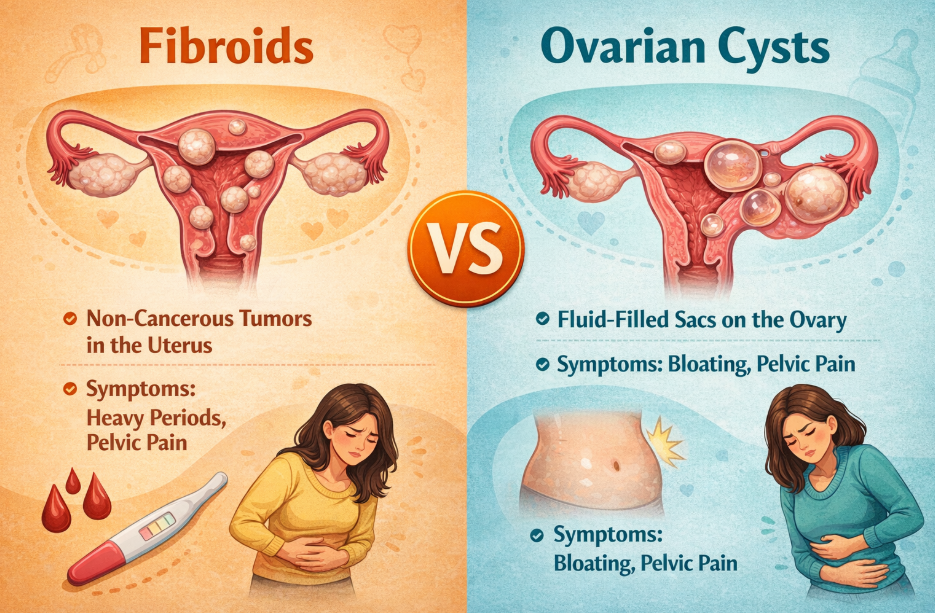
Fibroids are non-cancerous growths that develop in or around the uterus. They are made of muscle and fibrous tissue and can vary greatly in size. Some are tiny and cause no symptoms at all. Others become large enough to affect daily life, menstruation, fertility, or comfort.
Fibroids are usually classified by where they grow. Some develop within the wall of the uterus, some push into the uterine cavity, and others grow on the outer surface. Their location often matters as much as their size. For example, a smaller fibroid inside the uterine cavity may cause significant bleeding, while a larger fibroid on the outside of the uterus may mainly cause pressure or fullness.
Many women do not know they have fibroids until they undergo a pelvic examination or ultrasound. Others notice warning signs such as heavy menstrual bleeding, painful periods, pelvic pressure, lower abdominal swelling, frequent urination, constipation, or difficulty becoming pregnant.
Fibroids are common, especially during the reproductive years. The good news is that they are usually benign. The more important question is not simply whether fibroids are present, but whether they are causing symptoms, affecting quality of life, or creating problems with fertility, pregnancy, or anemia.
What are ovarian cysts?
Ovarian cysts are sacs that form in or on an ovary. In many cases, they are filled with fluid. Some cysts form as part of the normal menstrual cycle and disappear on their own without treatment. These are often called functional cysts. Others may persist for longer, grow larger, or develop more complex features that need closer follow-up.
Just like fibroids, many ovarian cysts are found by chance during an ultrasound. Some do not cause any symptoms. However, when symptoms do happen, they may include one-sided pelvic pain, lower abdominal fullness, bloating, discomfort during sex, pain around the time of the period, or a sense of pressure in the pelvis.
The pattern can be different from fibroids. Fibroids often show up through changes in menstrual bleeding, while ovarian cysts often present more through discomfort, pressure, or pain. In some cases, a cyst can rupture or twist the ovary, causing sudden and severe pain. That is why persistent or sharp pelvic pain should never be dismissed without assessment.
Fibroids cysts vs. ovarian cysts: the main difference
The easiest way to understand the difference is this:
Fibroids grow in the uterus.
Ovarian cysts grow in the ovaries.
Fibroids are usually solid growths made of muscle and tissue.
Ovarian cysts are usually fluid-filled sacs, although some may contain other types of material.
Fibroids are more likely to cause:
- heavy or prolonged periods
- pressure in the lower abdomen
- anemia from blood loss
- fertility problems related to the uterus
Ovarian cysts are more likely to cause:
- one-sided pelvic pain
- bloating or fullness
- discomfort with movement or intercourse
- sudden pain if a complication occurs
That said, real life is not always this neat. Symptoms can overlap. A woman with fibroids may feel bloated. A woman with an ovarian cyst may notice cycle changes. This is why self-diagnosis based only on online reading is unreliable. The right diagnosis usually needs medical history, examination, and pelvic ultrasound together.
Common symptoms that should not be ignored
Women often normalise pelvic symptoms for too long. Heavy periods are dismissed as “just hormones.” Bloating is blamed on food. Pelvic pressure is ignored because life is busy. But when symptoms keep repeating, it is worth seeing a doctor.
You should consider visiting a gynaecologist in Nepal if you have:
Heavy menstrual bleeding
Bleeding that feels much heavier than usual, lasts longer than normal, or includes large clots may suggest fibroids or another uterine condition.
Pelvic pain
Aching, pressure, cramping, or sharp pain in the lower abdomen should be checked, especially if it keeps returning or becomes more intense.
Bloating or fullness
Ongoing bloating or a feeling of abdominal heaviness may happen with larger fibroids or ovarian cysts.
Frequent urination or constipation
A growing pelvic mass can press on nearby organs such as the bladder or bowel.
Pain during intercourse
Pelvic conditions can sometimes make intercourse uncomfortable or painful.
Irregular cycles
Cycle changes do not always mean a serious disease, but persistent irregularity deserves evaluation.
Difficulty getting pregnant
Fibroids and some ovarian conditions can affect fertility, depending on their size, type, and location.
Why proper diagnosis matters
The biggest mistake patients make is assuming that every fibroid must be removed or that every ovarian cyst is dangerous. Neither is true. Some women only need observation and symptom tracking. Others need medication. Some may need surgery. The correct plan depends on the exact diagnosis.
This is why choosing the right clinic in Nepal matters. A proper gynaecological evaluation is not just about naming a condition. It is about answering practical questions:
What exactly is it?
Is it causing your symptoms?
Does it need treatment now?
Can it be monitored safely?
Will it affect fertility or pregnancy?
What are the safest next steps?
A reliable women’s health consultation usually starts with a detailed history. Your doctor may ask about your menstrual cycle, pain pattern, bleeding amount, fertility plans, sexual history where relevant, previous surgeries, and whether symptoms are getting worse.
A pelvic examination may be done when needed. In many cases, an ultrasound is the most useful next step because it helps show whether the issue is coming from the uterus, the ovary, or another pelvic structure.
How fibroids are diagnosed
Fibroids are often suspected from symptoms such as heavy bleeding and pelvic pressure, but imaging is usually needed to confirm them. Ultrasound is commonly the first test because it can show the number, size, and location of the fibroids.
This matters because treatment decisions are based on more than the word “fibroid.” A small fibroid that is not causing any symptoms may simply be observed. A fibroid that changes the shape of the uterine cavity may need more active management, especially if a woman is trying to conceive or is having significant bleeding.
Blood tests may also be recommended if there is concern about anemia from heavy periods. In more specific cases, further imaging or procedures may be discussed, depending on symptoms and future reproductive goals.
How ovarian cysts are diagnosed
Ovarian cysts are also commonly diagnosed through pelvic ultrasound. The scan can help show whether a cyst appears simple, complex, small, large, temporary, or persistent. This information guides the next step.
Some cysts are observed with repeat imaging after a period of time. Others may need closer evaluation if they are large, painful, or have unusual features. The appearance of the cyst, the woman’s age, symptoms, menstrual status, and medical history all matter.
It is important to understand that the phrase “you have a cyst” is only the beginning of the discussion, not the final answer. Patients deserve to know what kind of cyst it is likely to be, whether it may resolve on its own, and what symptoms should prompt urgent review.
Treatment for fibroids
Fibroid treatment depends on symptom severity, fibroid location, age, and fertility plans. Not all fibroids need treatment. If the fibroids are small and not causing significant symptoms, regular follow-up may be enough.
When symptoms are affecting daily life, treatment may include medicines to reduce heavy bleeding or relieve pain. If anemia is present, iron treatment may also be needed. In women who want to preserve fertility, the plan may focus on protecting the uterus while improving symptoms.
For some patients, procedures or surgery may be recommended. This can happen when bleeding is severe, pressure symptoms are significant, fertility is affected, or fibroids continue to grow. The best treatment is individual. It should not be based on fear, guesswork, or a one-size-fits-all package.
Treatment for ovarian cysts
Treatment for ovarian cysts also varies. Many simple cysts disappear without treatment and only require observation. Some women may only need follow-up ultrasound and symptom monitoring.
If the cyst is painful, persistent, large, or suspicious on imaging, the doctor may recommend further treatment. In some cases, surgery may be advised, especially when there is concern about complications or when the cyst is unlikely to go away on its own.
When surgery is needed, preserving healthy ovarian tissue is often an important goal, especially for women who want future fertility. That is why careful planning and specialist care matter.
Fibroids, ovarian cysts, and fertility
One of the most sensitive questions women ask is whether fibroids or ovarian cysts can affect pregnancy. The answer is sometimes yes, but not always.
Fibroids may affect fertility if they distort the uterine cavity, interfere with implantation, or contribute to repeated miscarriage or heavy bleeding. However, many women with fibroids conceive naturally and have healthy pregnancies.
Ovarian cysts affect fertility differently. Some functional cysts have little long-term effect. However, certain types of cysts, such as those linked with endometriosis, may be more relevant in fertility assessment.
This is why women who are planning pregnancy should not delay evaluation if they already know they have fibroids, have ongoing pelvic symptoms, or are struggling to conceive. Early diagnosis can make treatment simpler and more fertility-friendly.
When should you see a doctor urgently?
Some symptoms should be treated as urgent. Seek immediate medical attention if you have:
- sudden severe pelvic or abdominal pain
- pain with vomiting or fever
- fainting or severe weakness
- very heavy bleeding with dizziness
- rapidly worsening abdominal swelling or severe tenderness
These symptoms may point to a complication such as ovarian torsion, cyst rupture, or severe blood loss. Emergency symptoms should never be managed only with online advice.
Why choosing the right gynaecology clinic matters
For many women, the biggest challenge is not just the condition. It is finding the right place to get evaluated without delay, confusion, or judgment. A good gynaecology clinic in Nepal should offer more than a quick prescription. It should provide clear diagnosis, respectful communication, access to imaging and follow-up, and a treatment plan that matches the woman’s age, symptoms, and reproductive goals.
Karuna City Clinic presents itself as a multispecialty health clinic in Kathmandu with dedicated women’s health and OB/GYN services, along with diagnostic and imaging support. Its published gynecology pages also highlight specialist consultation and women’s health procedures, which is exactly the kind of structure patients look for when comparing options.
For women searching for a clinic in Nepal that can evaluate heavy periods, pelvic pain, bloating, fertility concerns, or abnormal ultrasound findings, what matters most is timely review and a trustworthy plan.
Book a women’s health consultation at Karuna City Clinic if you are experiencing heavy periods, pelvic pain, bloating, irregular cycles, or fertility concerns. Early diagnosis can make treatment easier and more effective.
Final thoughts
Fibroids and ovarian cysts are both common, but they are not the same condition. Fibroids grow in the uterus and often cause heavy bleeding or pressure. Ovarian cysts grow in the ovaries and often present with one-sided pain, fullness, or sudden discomfort if complications occur.
The right next step is not panic. It is evaluation.
If symptoms are interfering with your comfort, routine, work, or future plans, do not keep guessing. Visit a trusted gynaecologist in Nepal and get a proper assessment. For women looking for a dependable gynaecology clinic in Nepal, Karuna City Clinic offers a patient-focused pathway for consultation, women’s health care, and follow-up in Kathmandu.